


Navigating the Cloud Platform Decision
The Azure vs AWS debate represents one of the most critical technology decisions facing organizations in 2026, with the global cloud computing market projected to exceed $675 billion. Microsoft Azure and Amazon Web Services collectively command over 60% of the cloud infrastructure market, yet choosing between these giants impacts everything from development velocity and operational costs to talent acquisition and strategic partnerships.
Microsoft Azure vs Amazon Web Services isn’t simply a technical comparison—it’s a strategic business decision. AWS pioneered Infrastructure as a Service (IaaS) in 2006 and maintains market leadership with approximately 32% share. Microsoft Azure, launched in 2010, has rapidly grown to 23% market share by leveraging Microsoft’s enterprise relationships, seamless Windows integration, and aggressive hybrid cloud strategy.
For CTOs, developers, startup founders, and ML engineers evaluating Azure vs AWS, the decision extends beyond feature checklists to encompass ecosystem alignment, existing technology investments, licensing considerations, and organizational culture. Enterprises with Microsoft-centric IT environments face different considerations than startups building cloud-native applications or organizations pursuing multi-cloud strategies.
What is Amazon Web Services (AWS)?
Amazon Web Services is the world’s most comprehensive and widely adopted cloud platform, offering over 200 fully featured services spanning compute, storage, databases, networking, analytics, machine learning, IoT, security, and application development. Launched in 2006 with S3 and EC2, AWS pioneered the cloud computing revolution and has maintained market leadership through relentless innovation and global infrastructure expansion.

Key Features of AWS
Unmatched Service Breadth and Innovation
AWS’s defining advantage is its comprehensive service portfolio:
- Compute: EC2 virtual machines (500+ instance types), Lambda serverless functions, ECS/EKS container orchestration, Lightsail simplified VPS, Batch for batch computing, Fargate serverless containers
- Storage: S3 object storage (11 nines of durability), EBS block storage, EFS file systems, Glacier for archival, FSx for Windows/Lustre workloads
- Databases: RDS managed databases (Aurora, PostgreSQL, MySQL, MariaDB, Oracle, SQL Server), DynamoDB NoSQL, Redshift data warehouse, DocumentDB, Neptune graph database, Timestream time-series
- Machine Learning: SageMaker for complete ML lifecycle, Rekognition for computer vision, Comprehend for NLP, Forecast for predictions, Personalize for recommendations
- Analytics: EMR for big data, Athena for SQL queries, Kinesis for real-time streaming, Glue for ETL, QuickSight for business intelligence
AWS releases approximately 3,000+ new features and services annually, maintaining its innovation leadership position.
Global Infrastructure Leadership
AWS operates the most extensive global infrastructure:
- 33 geographic regions with 105 availability zones across 6 continents
- 500+ CloudFront edge locations for content delivery
- Local Zones in metro areas for ultra-low latency applications
- Wavelength Zones embedded in telecom networks for 5G edge computing
- AWS Outposts bringing AWS infrastructure on-premises for hybrid deployments
This infrastructure supports enterprises requiring data residency compliance and global reach simultaneously.
Mature Enterprise Ecosystem
Two decades of development created the richest cloud ecosystem:
- AWS Marketplace: 12,000+ software listings from independent software vendors
- Partner Network: Thousands of consulting partners specializing in AWS migrations and managed services
- Largest talent pool: Millions of AWS-certified professionals globally
- Community resources: Extensive documentation, tutorials, Stack Overflow answers, and reference architectures
- Startup programs: AWS Activate providing up to $100,000 in credits for venture-backed startups
Innovation and Early Market Advantage
AWS’s first-mover advantage manifests in service maturity:
- Lambda serverless computing (launched 2014, years ahead of competitors)
- Graviton ARM-based processors delivering 40% better price-performance
- Amazon Aurora delivering 5× MySQL performance at 1/10th commercial database cost
- Continuous improvement based on millions of customer workloads
Use Cases for AWS
Cloud-Native Application Development:

- Microservices architectures on containers (ECS, EKS)
- Serverless applications with Lambda and API Gateway
- Modern web applications with Amplify framework
- DevOps pipelines using CodePipeline, CodeBuild, CodeDeploy
Big Data and Analytics:
- Data lakes on S3 with Athena for SQL analytics
- Real-time streaming with Kinesis
- Data warehousing with Redshift
- ETL processing with Glue
Machine Learning at Scale:
- End-to-end ML with SageMaker
- Computer vision applications with Rekognication
- Natural language processing with Comprehend
- Recommendation engines with Personalize
What is Microsoft Azure?
Microsoft Azure is Microsoft’s cloud computing platform providing 200+ products and services for building, deploying, and managing applications through Microsoft’s global network of data centers. Launched in 2010 as Windows Azure, the platform has evolved into a comprehensive cloud offering that leverages Microsoft’s 50+ years of enterprise software expertise, particularly in Windows Server, Active Directory, SQL Server, and developer tools.

Key Features of Azure
Seamless Microsoft Ecosystem Integration
Azure’s competitive advantage lies in deep Microsoft technology integration:
- Azure Active Directory: Enterprise-grade identity and access management integrated with Office 365 and Microsoft 365
- Windows Server licensing: Significant cost advantages through Azure Hybrid Benefit (use existing licenses in cloud)
- SQL Server integration: Seamless migration and management of SQL Server databases
- Visual Studio and GitHub integration: Unified development experience for .NET and open-source projects
- Microsoft 365 connectivity: Native integration between cloud infrastructure and productivity tools
- Power Platform: Low-code/no-code application development with Power Apps, Power Automate, Power BI
Organizations with Microsoft Enterprise Agreements often achieve 30-50% TCO reduction on Azure versus AWS due to licensing synergies.
Hybrid Cloud Excellence
Azure leads the industry in hybrid cloud capabilities:
- Azure Arc: Manage on-premises, multi-cloud, and edge resources through unified control plane
- Azure Stack: Run Azure services on-premises with consistent APIs and development experience
- Azure Stack HCI: Hyperconverged infrastructure for virtualized workloads
- ExpressRoute: Dedicated private connections to Azure with predictable performance
- Azure Migrate: Comprehensive assessment and migration tools for legacy applications
Microsoft’s “intelligent cloud, intelligent edge” strategy makes Azure ideal for enterprises pursuing gradual cloud adoption.
Enterprise-Focused Services
Azure emphasizes enterprise requirements:
- Azure Policy: Governance and compliance at scale with built-in policy definitions
- Azure Blueprints: Repeatable environment deployment with compliance controls
- Azure Cost Management: Detailed cost analysis and optimization recommendations
- Azure Advisor: Personalized best practice recommendations for optimization
- Extensive compliance certifications: 90+ compliance offerings including HIPAA, GDPR, SOC 2, ISO 27001, FedRAMP
AI and Developer Tools Leadership
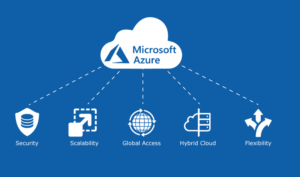
Azure excels in artificial intelligence and developer experience:
- Azure OpenAI Service: Exclusive access to GPT-4, ChatGPT, and DALL-E models through partnership with OpenAI
- Azure Cognitive Services: Pre-built AI APIs for vision, speech, language, and decision
- Azure Machine Learning: Enterprise-grade ML platform with MLOps capabilities
- GitHub Copilot integration: AI-powered coding assistant integrated throughout development workflow
- Visual Studio Code and Visual Studio: Industry-leading development environments with native Azure integration
Use Cases for Azure
Windows and .NET Application Hosting:
- ASP.NET web applications and APIs
- Windows Server workload migrations
- SQL Server database hosting and modernization
- Active Directory-dependent enterprise applications
Hybrid and Multi-Cloud Architectures:
- Gradual cloud migration with Azure Arc
- On-premises Azure Stack deployments
- Disaster recovery between on-premises and cloud
- Consistent management across environments
Enterprise AI and Analytics:
- Azure OpenAI Service for generative AI applications
- Machine learning model development with Azure ML
- Data warehousing with Azure Synapse Analytics
- Real-time analytics with Azure Stream Analytics
DevOps and Application Modernization:
- CI/CD pipelines with Azure DevOps
- Container orchestration with Azure Kubernetes Service (AKS)
- Serverless computing with Azure Functions
- Low-code development with Power Platform
Azure vs AWS: Key Differences
Understanding the architectural, operational, and strategic differences between Microsoft Azure vs Amazon Web Services clarifies where each platform excels.
Compute Services Comparison
AWS EC2 vs Azure Virtual Machines
Both platforms provide robust virtual machine offerings with distinct approaches:
AWS EC2:
- 500+ instance types across multiple families (general, compute, memory, storage, GPU, inference)
- Spot Instances: Up to 90% discount for interruptible workloads
- Reserved Instances: 1-3 year commitments for 30-60% savings
- Graviton processors: ARM-based instances with 40% better price-performance
- Bare metal instances: Single-tenant hardware for specialized workloads
Azure Virtual Machines:
- 275+ VM sizes across multiple series (A, B, D, E, F, G, H, L, M, N)
- Spot VMs: Similar discount model to AWS Spot Instances
- Reserved Instances: 1-3 year commitments with 40-72% savings
- Azure Hybrid Benefit: Use existing Windows Server licenses, saving up to 49%
- Dedicated Hosts: Single-tenant physical servers
Pricing Example (General Purpose VM):
Configuration: 4 vCPUs, 16GB RAM, Windows Server
- AWS m5.xlarge: ~$0.192/hour (compute) + ~$0.096/hour (Windows license) = $0.288/hour (~$210/month)
- Azure D4s v5: ~$0.192/hour (compute) + $0/hour (with Azure Hybrid Benefit) = $0.192/hour (~$140/month)
- Savings with Azure Hybrid Benefit: 33% for Windows workloads
Winner: Azure for Microsoft-centric workloads with licensing benefits; AWS for instance variety and specialized workloads
Serverless Computing: Lambda vs Azure Functions
AWS Lambda:
- 15-minute maximum execution time
- 10GB memory maximum
- Extensive event sources: S3, DynamoDB, SQS, SNS, EventBridge, Kinesis, API Gateway
- Lambda@Edge: Execute functions at CloudFront edge locations
- Pricing: $0.20 per 1M requests + compute time charges
Azure Functions:
- Consumption Plan: 5-minute timeout (10 minutes with configuration)
- Premium Plan: Unlimited execution time with pre-warmed instances
- Event sources: Event Grid, Cosmos DB, Blob Storage, Service Bus, Event Hubs
- Durable Functions: Stateful workflows and orchestrations
- Pricing: $0.20 per 1M executions + compute time
Winner: AWS Lambda for event-driven microservices; Azure Functions for workflow orchestration and integration
Storage Solutions Comparison
Object Storage: S3 vs Azure Blob Storage
AWS S3:
- 11 nines of durability (99.999999999%)
- Storage classes: Standard, Intelligent-Tiering, Standard-IA, One Zone-IA, Glacier Instant/Flexible/Deep Archive
- Advanced features: S3 Select, Object Lock, Batch Operations, Replication
- Ecosystem integration: Industry standard with universal third-party support
Azure Blob Storage:
- Comparable durability with locally redundant (LRS), zone-redundant (ZRS), geo-redundant (GRS) options
- Access tiers: Hot, Cool, Cold, Archive
- Hierarchical namespace: Data Lake Storage Gen2 for big data analytics
- Integration: Native integration with Azure services and Microsoft ecosystem
Cost Comparison (1TB storage, 1TB retrieval):
- AWS S3 Standard: $23/month storage + $90 egress = $113/month
- Azure Blob Hot: $18/month storage + $87 egress = $105/month
Winner: Comparable, with slight Azure edge on pricing; S3 leads in ecosystem maturity
Managed Databases: RDS/Aurora vs Azure SQL/Cosmos DB
AWS Database Services:
- RDS: Managed PostgreSQL, MySQL, MariaDB, Oracle, SQL Server
- Aurora: MySQL/PostgreSQL-compatible with 5× performance, 99.99% availability
- DynamoDB: Fully managed NoSQL with single-digit millisecond latency
- Redshift: Petabyte-scale data warehouse
Azure Database Services:
- Azure SQL Database: Fully managed SQL Server with AI-powered optimization
- Azure Database for PostgreSQL/MySQL: Managed open-source databases
- Cosmos DB: Globally distributed, multi-model NoSQL with 99.999% availability SLA
- Azure Synapse Analytics: Unified analytics service combining data warehouse and big data
SQL Server Comparison:
- AWS RDS for SQL Server: Managed SQL Server with limited instance sizes and features
- Azure SQL Database: Native SQL Server with advanced features, automatic tuning, serverless compute
Winner: Azure decisively for SQL Server workloads; AWS Aurora leads for MySQL/PostgreSQL; Cosmos DB edges DynamoDB for global distribution
Machine Learning and AI Comparison
AWS vs Azure AI/ML Services
AWS Machine Learning:
- SageMaker: End-to-end ML platform with notebooks, training, deployment, monitoring
- Pre-built AI services: Rekognition (vision), Comprehend (NLP), Transcribe (speech-to-text), Translate
- Specialized hardware: Trainium for training, Inferentia for inference
- Broad framework support: TensorFlow, PyTorch, MXNet, scikit-learn
Azure AI and ML:
- Azure OpenAI Service: Exclusive access to GPT-4, GPT-3.5, ChatGPT, DALL-E models
- Azure Machine Learning: Enterprise ML platform with MLOps, AutoML, responsible AI tools
- Cognitive Services: Pre-built APIs for vision, speech, language, decision
- Azure AI Studio: Unified interface for building generative AI applications
Key Differentiator: Azure’s partnership with OpenAI provides exclusive access to industry-leading generative AI models, giving Azure significant advantage for enterprises building AI-powered applications.
Winner: Azure for generative AI (OpenAI integration); AWS for traditional ML flexibility
Pricing Models and Cost Management
Pricing Philosophy Differences:
| Pricing Aspect | AWS | Azure |
| Compute Billing | Per-second (Linux), per-hour (Windows) | Per-second for all VMs |
| Discounts | Reserved Instances, Savings Plans | Reserved Instances, Hybrid Benefit |
| License Advantage | Limited BYOL options | Azure Hybrid Benefit (major savings) |
| Free Tier | 12 months free tier | 12 months + always-free services |
| Cost Management | AWS Cost Explorer, Budgets | Azure Cost Management + Billing |
TCO Comparison Example:
Enterprise workload: 50 Windows VMs (4 cores, 16GB RAM), 100TB storage, SQL Server Enterprise
AWS Estimate:
- EC2 (50× m5.xlarge + Windows): ~$10,500/month
- EBS storage (100TB): ~$10,000/month
- SQL Server licenses: ~$8,000/month
- Data transfer: ~$1,000/month
- Total: ~$29,500/month
Azure Estimate:
- VMs (50× D4s v5 with Hybrid Benefit): ~$7,000/month
- Managed Disks (100TB): ~$9,200/month
- SQL Server (with Hybrid Benefit): $0/month
- Data transfer: ~$1,000/month
- Total: ~$17,200/month (42% cheaper)
Winner: Azure for Microsoft-centric workloads with licensing benefits; AWS for non-Microsoft workloads
Hybrid Cloud and Management
Azure’s Hybrid Cloud Leadership:
Microsoft’s hybrid strategy surpasses AWS:
- Azure Arc: Manage servers, Kubernetes, databases, and applications across on-premises, multi-cloud, and edge
- Azure Stack Hub/HCI: Run Azure services on-premises with consistent experience
- Unified management: Single pane of glass for all resources regardless of location
- Consistent deployment: Same ARM templates work on-premises and in cloud
AWS Hybrid Capabilities:
- AWS Outposts: On-premises AWS infrastructure (requires significant investment)
- VMware Cloud on AWS: Hybrid cloud for VMware environments
- AWS Systems Manager: Hybrid management for servers
- Storage Gateway: Hybrid storage integration
Winner: Azure decisively for hybrid cloud, especially for enterprises with significant on-premises investments
When to Choose AWS
AWS remains the optimal choice for specific organizational profiles and technical requirements.
Ideal Scenarios for AWS
- Cloud-Native Startups and Innovation-Focused Organizations
Startups building from scratch benefit from AWS advantages:
- Broadest service portfolio: 200+ services covering every conceivable need
- Startup ecosystem alignment: AWS Activate, VC preferences, extensive startup support
- Innovation pace: 3,000+ new features annually, first-to-market with innovations
- Largest talent pool: Millions of AWS-certified developers globally
- Linux and Open-Source Workloads
Organizations prioritizing open-source technologies:
- Superior Linux support: AWS’s origins in Linux give it deeper optimization
- Open-source databases: More mature RDS PostgreSQL, Aurora PostgreSQL
- Container ecosystems: Industry-standard ECS and EKS with extensive tooling
- Graviton processors: ARM-based instances optimized for open-source workloads
- Advanced Analytics and Big Data
Data-intensive organizations leverage AWS’s analytics leadership:
- Mature data lake architecture: S3 + Athena + Glue ecosystem
- EMR for Hadoop/Spark: Industry-standard big data processing
- Redshift performance: Continuous improvements maintaining leadership
- Kinesis for streaming: Real-time data processing at massive scale
- Multi-Region Global Applications
Enterprises requiring global presence:
- 33 regions worldwide: Most extensive geographic coverage
- Advanced networking: Global Accelerator, CloudFront with 500+ PoPs
- Cross-region capabilities: Mature tools for multi-region architectures
- Maximum Service Variety and Specialization
Organizations needing niche or specialized services:
- IoT services: Comprehensive IoT Core, Greengrass, FreeRTOS ecosystem
- Blockchain: Amazon Managed Blockchain
- Quantum computing: Amazon Braket
- Satellite communications: AWS Ground Station
AWS Decision Checklist
Choose AWS if you answer “yes” to 3+ of these:
- ☐ We’re building cloud-native applications from scratch
- ☐ We prioritize service breadth and innovation velocity
- ☐ We’re primarily Linux/open-source focused
- ☐ We need the largest developer talent pool
- ☐ We require global presence across 30+ regions
- ☐ We’re in AWS startup ecosystem or have VC backing
- ☐ Advanced analytics and big data are core capabilities
When to Choose Azure
Microsoft Azure excels for organizations with specific Microsoft technology investments and enterprise requirements.
Ideal Scenarios for Azure
- Microsoft-Centric Enterprises
Organizations standardized on Microsoft technologies achieve dramatic benefits:
- Azure Hybrid Benefit: 30-50% cost savings with existing Windows/SQL Server licenses
- Active Directory integration: Seamless identity management across on-premises and cloud
- Office 365/Microsoft 365 integration: Unified productivity and infrastructure platform
- SQL Server optimization: Native SQL Database features and performance
- Visual Studio integration: Superior development experience for .NET developers
- Hybrid Cloud and Gradual Migration
Enterprises pursuing incremental cloud adoption:
- Azure Arc: Industry-leading multi-cloud and hybrid management
- Azure Stack: Run Azure services on-premises with identical experience
- Consistent tooling: Same APIs, CLI, and management across environments
- ExpressRoute: Predictable private connectivity for hybrid scenarios
- Enterprise Governance and Compliance
Organizations with strict governance requirements:
- Azure Policy: Comprehensive built-in policies and custom policy creation
- Azure Blueprints: Repeatable compliant environments
- Management groups: Hierarchical organization and policy inheritance
- 90+ compliance certifications: Extensive compliance portfolio
- Generative AI and Modern Application Development
Organizations building AI-powered applications:
- Azure OpenAI Service: Exclusive access to GPT-4, ChatGPT, DALL-E
- Power Platform: Low-code/no-code development for business users
- GitHub Copilot: AI-powered development assistance
- Azure AI Studio: Unified generative AI development platform
- Windows Server and SQL Server Workloads
Organizations running Microsoft databases and applications:
- Superior Windows performance: Native Windows Server optimization
- SQL Server capabilities: Advanced features not available on AWS
- License mobility: Flexible licensing across on-premises and cloud
- Migration tools: Azure Migrate with Windows/SQL Server specialization
Azure Decision Checklist
Choose Azure if you answer “yes” to 3+ of these:
- ☐ We have significant Windows Server and SQL Server investments
- ☐ We have Microsoft Enterprise Agreement or Software Assurance
- ☐ We need hybrid cloud with on-premises integration
- ☐ We’re building generative AI applications (OpenAI integration)
- ☐ We use Office 365/Microsoft 365 extensively
- ☐ We prefer .NET and Visual Studio development tools
- ☐ We need comprehensive governance and compliance controls
Azure vs AWS: Decision Matrix
| Evaluation Criteria | Choose AWS If… | Choose Azure If… |
| Microsoft Stack | Minimal Windows/SQL Server | Extensive Microsoft technologies |
| Cloud Maturity | Building cloud-native from scratch | Gradual migration from on-premises |
| Licensing | No existing Microsoft licenses | Microsoft EA with Software Assurance |
| Development Focus | Multi-language/open-source | .NET, C#, Windows development |
| Hybrid Cloud | Minimal hybrid requirements | Significant on-premises integration |
| Service Breadth | Need maximum service variety | Core services sufficient with Microsoft integration |
| Innovation Pace | Want bleeding-edge features | Prefer stability and enterprise focus |
| AI Strategy | Traditional ML and diverse AI | Generative AI (GPT-4, ChatGPT) |
| Global Reach | Need 30+ regions | 60+ regions sufficient |
| Talent Availability | Want largest talent pool | Microsoft skills available internally |
Frequently Asked Questions (FAQ)
Q: Which is cheaper: Azure vs AWS?
A: Total cost depends on your specific workload. Azure typically costs 30-50% less for Windows/SQL Server workloads with Azure Hybrid Benefit. AWS often costs less for Linux/open-source workloads. Use official pricing calculators with realistic usage patterns to calculate your TCO.
Q: Is Azure easier to use than AWS?
A: Azure’s interface is generally considered more intuitive, especially for users familiar with Microsoft products. AWS offers more services but with greater complexity. Azure provides better out-of-box governance and policy management. Developer experience preference depends on whether you use Visual Studio (.NET) or other tools.
Q: Which cloud platform has better security?
A: Both offer enterprise-grade security with comparable certifications (HIPAA, GDPR, SOC 2, ISO 27001, FedRAMP). Azure integrates seamlessly with Active Directory for identity management. AWS provides more granular IAM controls. Both meet enterprise security requirements—choose based on integration needs rather than absolute security capabilities.
Q: Can I use both Azure and AWS together?
A: Yes. Multi-cloud strategies are increasingly common. Many organizations use Azure for Microsoft workloads and AWS for Linux/analytics workloads. However, multi-cloud increases complexity, requires expertise in both platforms, and may increase costs due to data transfer between clouds.
Q: Which platform is better for machine learning?
A: Azure leads in generative AI through OpenAI partnership (GPT-4, ChatGPT). AWS SageMaker offers more comprehensive traditional ML features and flexibility. For generative AI applications, Azure has clear advantage. For traditional ML with diverse framework support, AWS edges ahead.
Conclusion: Making Your Azure vs AWS Decision
The Azure vs AWS decision ultimately depends on your existing technology investments, organizational priorities, and application requirements. Neither platform is universally superior—each excels for specific scenarios and organizational profiles. With guidance from GoCloud, organizations can assess their cloud landscape, align platform choices with business goals, and design scalable, secure architectures that deliver long-term value.