

Choosing Between AWS and Firebase in 2026
When building modern mobile and web applications, the AWS vs Firebase decision is one of the most critical choices facing CTOs, developers, and startup founders. Amazon Web Services (AWS) dominates the cloud infrastructure market with over 32% share, offering 200+ services spanning compute, storage, databases, and machine learning across a global infrastructure of 33 regions. Google Firebase, now deeply integrated with Google Cloud Platform (GCP), provides a Backend-as-a-Service (BaaS) solution optimized for rapid mobile and web development, with real-time databases, authentication, hosting, and analytics bundled into a cohesive platform.
The choice between AWS’s Infrastructure-as-a-Service (IaaS) flexibility and Firebase’s Platform-as-a-Service (PaaS) simplicity fundamentally shapes development speed, operational complexity, long-term scalability, and total cost of ownership. This comprehensive 2026 comparison examines architecture differences, pricing models, developer experience, security frameworks, and real-world use cases to help you select the optimal backend platform for your application.
What is Amazon Web Services (AWS)?
Amazon Web Services, launched in 2006, pioneered cloud computing as we know it today. AWS is a comprehensive Infrastructure-as-a-Service (IaaS) and Platform-as-a-Service (PaaS) provider offering granular control over every aspect of your cloud infrastructure—from virtual machines and storage to networking, databases, and AI/ML services.
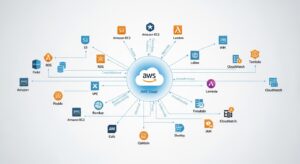
Key Features of AWS
Compute Services
- Amazon EC2: 500+ instance types for virtual machines, offering precise control over CPU, memory, storage, and networking. Supports Windows, Linux, and custom AMIs.
- AWS Lambda: Serverless compute with 15-minute maximum execution time, 10 GB memory, and pay-per-millisecond billing. Integrates with 200+ AWS services.
- AWS Elastic Beanstalk: PaaS layer for deploying Node.js, Python, Java, .NET, PHP, Ruby, Go, and Docker applications without managing infrastructure.
- Amazon ECS/EKS: Managed container orchestration for Docker (ECS) and Kubernetes (EKS).
Database & Storage
- Amazon S3: Industry-standard object storage with 99.999999999% (11 nines) durability and multiple storage classes (Standard, Intelligent-Tiering, Glacier).
- Amazon RDS: Managed relational databases supporting MySQL, PostgreSQL, MariaDB, Oracle, SQL Server, and Aurora (proprietary high-performance database).
- Amazon DynamoDB: Fully managed NoSQL key-value database with single-digit millisecond latency, automatic scaling, and global tables.
- Amazon Aurora Serverless: Auto-scaling relational database that adjusts capacity based on demand.
Backend Services
- AWS Amplify: Frontend framework and backend toolchain for building mobile and web apps. Provides libraries for authentication, storage, APIs, and real-time data.
- Amazon Cognito: User authentication and authorization supporting social logins, SAML, OAuth 2.0, and multi-factor authentication (MFA).
- Amazon API Gateway: Create, publish, and manage REST and WebSocket APIs with throttling, caching, and security.
- AWS AppSync: Managed GraphQL service with real-time subscriptions and offline data sync.
Developer Tools
- AWS CloudFormation: Infrastructure-as-code (IaC) for provisioning
- resources via templates.
- AWS CodePipeline, CodeBuild, CodeDeploy: Complete CI/CD pipeline for automated testing and deployment.
- Amazon CloudWatch: Monitoring, logging, and observability platform with custom metrics and alarms.
AWS Use Cases
- Enterprise applications: Complex, multi-tier architectures requiring custom configurations, compliance certifications (HIPAA, FedRAMP, SOC 2), and hybrid cloud integration (AWS Outposts).
- Microservices architectures: Container-based applications leveraging ECS, EKS, Lambda, and API Gateway for event-driven, distributed systems.
- Data-intensive workloads: Analytics pipelines using Amazon Redshift (data warehouse), Kinesis (streaming), Glue (ETL), and SageMaker (ML).
- Legacy migration: “Lift and shift” migrations of existing on-premises applications to EC2 with minimal refactoring.
- Full-stack control: Scenarios requiring custom network configurations (VPC, subnets, security groups), operating system access, or specialized hardware (GPU instances for ML).
What is Google Firebase?
Firebase, acquired by Google in 2014 and integrated with Google Cloud Platform in 2016, is a Backend-as-a-Service (BaaS) and Platform-as-a-Service (PaaS) designed to accelerate mobile and web application development. Firebase abstracts away infrastructure management, providing pre-built backend services, real-time synchronization, and tight integration with frontend frameworks like Flutter, React, Angular, and iOS/Android SDKs.
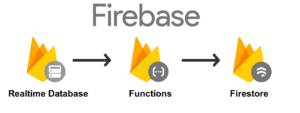
Key Features of Firebase
Real-Time Database & Firestore
- Firebase Realtime Database: NoSQL JSON tree database with real-time data synchronization across all connected clients in milliseconds. Ideal for chat apps, collaborative editing, and live dashboards.
- Cloud Firestore: Next-generation document-based NoSQL database with richer querying, hierarchical data structures, automatic indexing, and better scalability than Realtime Database. Supports offline persistence and multi-region replication.
Authentication & Security
- Firebase Authentication: Drop-in authentication supporting email/password, phone, Google, Facebook, Twitter, GitHub, Apple, and custom auth providers. Includes built-in UI components and backend session management.
- Firebase Security Rules: Declarative rule language for protecting database and storage access based on user identity, data structure, and custom logic.
Hosting & Functions
- Firebase Hosting: Global CDN-backed static and dynamic hosting with automatic SSL certificates, custom domains, and single-command deployments.
- Cloud Functions for Firebase: Event-driven serverless JavaScript/TypeScript functions triggered by Firebase events (database writes, authentication, file uploads) or HTTPS requests.
Analytics & Engagement
- Google Analytics for Firebase: Free, unlimited mobile app analytics tracking user behavior, retention, conversions, and attribution across iOS and Android.
- Firebase Cloud Messaging (FCM): Cross-platform push notifications for iOS, Android, and web with targeting, A/B testing, and message scheduling.
- Firebase Remote Config: Dynamically change app behavior and appearance without publishing updates, with A/B testing and gradual rollouts.
- Firebase Crashlytics: Real-time crash reporting with stack traces, device info, and custom logging.
Storage & Machine Learning
- Cloud Storage for Firebase: Object storage for user-generated content (images, videos, files) with Firebase Authentication integration and Security Rules.
- Firebase ML: Pre-trained ML models (text recognition, image labeling, face detection) and custom TensorFlow Lite model deployment with on-device inference.
Firebase Use Cases
- Mobile-first applications: iOS and Android apps prioritizing rapid development, real-time features (chat, collaboration), and cross-platform synchronization.
- Prototypes & MVPs: Startups validating product-market fit within weeks using Firebase’s pre-built authentication, databases, and hosting.
- Real-time collaboration: Applications requiring live updates across multiple users—collaborative documents, multiplayer games, live dashboards, social feeds.
- Serverless web apps: Single-page applications (React, Angular, Vue.js) with dynamic backend logic using Cloud Functions and Firestore.
- Content-heavy apps: News apps, e-commerce platforms, and media streaming services leveraging Firestore’s scalability and Firebase Hosting’s CDN.
AWS vs Firebase: Key Differences
1. Service Model & Philosophy
| Aspect | AWS | Firebase |
| Model | IaaS + PaaS (infrastructure control) | BaaS + PaaS (abstracted backend) |
| Philosophy | Build-anything flexibility | Rapid development with conventions |
| Abstraction | Low-level infrastructure access | High-level managed services |
| Configuration | Granular control (VPC, security groups, IAM policies) | Opinionated defaults (Security Rules, SDKs) |
| Learning curve | Steep (200+ services, complex networking) | Gentle (10-15 core services, SDK-centric) |
Example: To build a user authentication system:
- AWS: Configure Cognito user pool → set up IAM roles → integrate with API Gateway → write Lambda authorizers → implement JWT validation (1-2 days).
- Firebase: Add Firebase Authentication SDK → call signInWithEmailAndPassword() → authentication complete (30 minutes).
Winner: Firebase for speed and simplicity; AWS for customization and control.
When to Choose AWS
✅ Choose AWS if you need:
- Complex, multi-tier architectures: Microservices spanning containers (EKS), serverless (Lambda), relational databases (RDS), message queues (SQS), and data lakes (S3 + Glue).
- Enterprise compliance: FedRAMP High, ITAR, NIST, PCI DSS Level 1, or custom compliance frameworks requiring VPC isolation and audit trails.
- Relational database requirements: PostgreSQL, MySQL, Oracle, or SQL Server with ACID transactions, complex joins, and stored procedures (AWS RDS/Aurora).
- Hybrid cloud: On-premises integration via AWS Outposts, Direct Connect, or VPN for regulated industries (finance, healthcare, government).
- Machine learning pipelines: SageMaker for training large models, distributed training across GPU clusters, and MLOps workflows (Feature Store, Model Registry, Pipelines).
- Legacy application migration: “Lift and shift” of existing VMs, Windows Server workloads, or .NET applications to EC2 with minimal refactoring.
- Cost optimization at scale: When serving >10M users, AWS’s granular pricing (Reserved Instances, Spot, Savings Plans) and architectural flexibility (CloudFront, ElastiCache, Aurora Serverless) can reduce costs below Firebase.
- Full infrastructure control: Custom networking (VPC peering, Transit Gateway), operating system access (EC2 SSH), and specialized hardware (GPU instances, Graviton ARM processors).
Best AWS scenarios:
- E-commerce platforms: Complex inventory management, payment processing, recommendation engines, and multi-region deployments (Amazon, Shopify).
- SaaS products: Multi-tenant architectures with tenant isolation, usage-based billing, and white-label deployments (Slack, Salesforce).
- Data analytics: ETL pipelines processing terabytes daily (Redshift, Glue, Kinesis, Athena).
- Gaming: Real-time multiplayer backends with GameLift, DynamoDB leaderboards, and S3 asset storage (Epic Games, Ubisoft).
When to Choose Firebase
✅ Choose Firebase if you need:
- Rapid mobile app development: iOS/Android apps requiring authentication, real-time sync, push notifications, and analytics within days—not months.
- Real-time collaboration: Chat applications, collaborative editors, live dashboards, multiplayer games, or social feeds where sub-100ms synchronization is critical.
- Prototypes & MVPs: Startups validating product-market fit with limited engineering resources, leveraging Firebase’s generous free tier (Spark plan).
- Serverless web apps: Single-page applications (React, Vue.js, Angular) with dynamic backends powered by Cloud Functions and Firestore—no server management.
- Cross-platform sync: Applications requiring automatic offline data persistence and conflict-free synchronization across web, iOS, and Android (Firestore offline mode).
- Minimal DevOps: Small teams (1-5 developers) without dedicated infrastructure engineers, prioritizing feature velocity over custom architecture.
- Content-driven apps: News apps, blogs, e-learning platforms, or media galleries where Firestore’s document model and Firebase Hosting’s CDN deliver content globally.
- Google ecosystem integration: Apps already using Google Cloud Platform, Google Analytics, Google Ads, or requiring seamless Google Sign-In.
Best Firebase scenarios:
- Social media apps: Messaging, feeds, notifications, and user profiles (Snapchat, Instagram Stories prototypes).
- On-demand services: Ride-sharing, food delivery, or marketplace apps with real-time driver/customer matching (early-stage Uber/DoorDash clones).
- Education & e-learning: Course platforms with video streaming (Cloud Storage), quizzes (Firestore), and progress tracking (Google Analytics for Firebase).
- IoT dashboards: Real-time monitoring of sensor data with Realtime Database and Firebase Hosting.
Frequently Asked Questions (FAQ)
1. Can I use AWS and Firebase together in the same application?
Yes. Use Firebase for frontend features (auth, real-time sync) and AWS for backend (databases, compute, analytics) to balance ease-of-use and flexibility.
2. Which is cheaper for a startup with 10,000 monthly active users?
Firebase is cheaper for small apps ($0–$50/month) due to free tiers. AWS costs more initially ($50–$150/month) but scales better for large user bases.
3. Does Firebase support relational databases like PostgreSQL or MySQL?
No. Firebase is NoSQL only (Firestore, Realtime DB). For relational needs, use Google Cloud SQL or AWS RDS.
4. How does real-time performance compare between Firebase and AWS AppSync?
Firebase Realtime Database is faster (<50ms latency). AWS AppSync (~100–150ms) is flexible but needs more setup.
5. Can I migrate from Firebase to AWS (or vice versa) later?
Yes, but it requires exporting data, rewriting authentication and functions, and planning 3–6 months for production apps.
Conclusion: Choosing the Right Platform for Your Needs
The AWS vs Firebase decision in 2026 hinges on team size, application complexity, timeline, and long-term scalability goals. At GoCloud, we help businesses evaluate these factors and choose the right backend platform. AWS delivers unmatched flexibility, supporting any architecture from legacy VMs to cutting-edge microservices with 200+ services, enterprise-grade compliance, and global infrastructure. Firebase accelerates mobile and web development with pre-built backend services, real-time synchronization, and zero DevOps overhead—ideal for startups, MVPs, and real-time collaboration apps.